Record erm-01, printed 14 September 2026. Every animal on this sheet has its own page and its own source at that address.
Ermine Trace Nadeya
prefix Ermine Trace · British Shorthair · DBE-NAD · line: Nadeya · both eyes blue, put down to a DBE variant or its line · Genotyped
Genealogy trace, one printable page carrying the proposed code
Under the variant field this directory proposes, this cat would read DBE 161p. A carrier of a variant with no published allele, on no named line. This is the group bare 161 exists for. The proposal is set out in full here, and no registry issues this field today: it is computed from the record at each build and is not part of any registration.
How this cat is connected to the trait
A laboratory has tested this animal itself, so nothing has to be traced: the result is on the cat.
What is flagged on this tree
- Ali g. Von den LAUSELÜMMELN. Name. Earlier entered here as Lauselmmeln, with the u umlaut dropped. The PawPeds pedigree for Ermine Trace Nadeya read 17 August 2026 gives Lauselümmeln. The spelling is corrected and the cat is the same animal: SRS ns 11 33 in both
- Schoenweg Mona Lisa. Query. The chart raises a question about this cat's blue eye and does not answer it. Chart C13 annotates this animal 'Chinchilla-point with very blue eyes, possibly due to a blue-eye gene rather than the colourpoint gene'. A colourpoint cat is blue-eyed through the C locus, so a blue eye on a pointed cat is normally accounted for and carries no evidence of a dominant variant. The compiler's point is that the depth of colour is unusual, which is an observation and not a test. It is recorded as the query it is and no variant is adopted
- Schoenweg Teodoro. Query. The chart raises a question about this cat's blue eye and does not answer it. Chart C13 annotates this animal 'Chinchilla-point with very blue eyes, possibly due to a blue-eye gene rather than the colourpoint gene'. A colourpoint cat is blue-eyed through the C locus, so a blue eye on a pointed cat is normally accounted for and carries no evidence of a dominant variant. The compiler's point is that the depth of colour is unusual, which is an observation and not a test. It is recorded as the query it is and no variant is adopted | the number that argues against him being a carrier. The cattery records that he had already sired about forty offspring before Nadeya, gold and silver, colourpoint and ordinary chinchilla, and that every one of them was normal. A dominant determinant carried by a sire shows in about half his kittens. One affected animal in forty is not that, and the cattery gives it as its own strongest argument for a mutation arising in Nadeya rather than descending into her. His pedigree carries a selkirk Rex at the third to fourth generation, Ali G. von den Lauselmmeln, SRS ns 11 33, and the cattery reports four further generations above that animal with no blue or odd eyed cat in them. Source: the Ermine Trace cattery's own published account of the line, 'Reviewing the dominant blue (DBE) gene in the Ermine Trace cattery', 2021, in English translation. A breeder statement and not a peer-reviewed source, and the counts in it are the cattery's own. S_ERMINE_238 | his own certificate, read 13 SEPTEMBER 2026. Tcc zbt bs 311013 011, British Shorthair, male, born 30 October 2013, BRI ns 11 33, silver-shaded-point. Sire Schoenweg Xavier BRI ns 11, dam Schoenweg Mona Lisa BRI ns 12 33. Four printed generations, all British except for two selkirk Rex, and the first of them is doubled. Ali G. von den Lauselummeln, SRS ns 11 33, stands twice on the dam's side, as a great-grandparent through Passimilla's Upper Class and again as a great-great-grandparent; White Pearl vom Zauberland, SRS ns 21 33, is a second Selkirk Rex beside him. That is the only non-British material on the sheet. The cattery reports four further generations above Ali G. with no blue or odd eyed cat in them, which this register has not seen. No genotype is held for this cat and none is published. He is not recorded as a carrier of DBE-NAD anywhere: the paper describes his blue eyes as the colourpoint and says the line's variant is DBE-NAD without attributing it to him, and about forty normal kittens by him argue against his carrying a dominant determinant at all. S_ERMINE_238 | he carries a title and the register held him without it. The cattery gives him as CH Schoenweg Teodoro. The title is recorded here rather than folded into the name, because this register keeps titles out of the name field so that two sources naming the same cat with and without a title still match. S_ERMINE_238 | he is the one animal above the founder whose dominant blue eye state cannot be read, and that is why the question keeps returning to him. He is BSH ns 11 33, a colourpoint, so his blue eyes have an ordinary cause and hide whatever else he carries. Every other animal above her is readable and shows nothing. What the register holds against him carrying it: about forty offspring before Nadeya, gold and silver, colourpoint and chinchilla, every one normal on the cattery's own count, where a dominant carried by a sire shows in about half; and his one other recorded offspring here, Ermine Trace Kashemir, BSH ns 11, readable and showing nothing. The register holds one other descendant of his and that cat shows nothing. S_ABOVE_247 | thirteen litters, and one dominant blue eye kitten in all of them. The breeder's count, supplied 13 September 2026, is that CH Schoenweg Teodoro sired thirteen litters and that Ermine trace Nadeya is the only one of his kittens that carried it. None of the others was a dominant blue eye cat. A dominant determinant carried by a sire reaches about half of every litter he gets, so thirteen litters from a carrier would have produced showing kittens in nearly all of them. One in thirteen litters is not a dominant being transmitted. It is a mutation arising in one kitten. The colourpoint objection does not survive this count either: a colourpoint sire hides the determinant on his own body, not in thirteen litters of his offspring. S_TEODORO_248
- Ermine trace Olwen. Her ancestry is British chinchilla throughout and the cattery bred her itself. It names the Burgersruh, Goldenen Winkel, Wahrberg and Schoenweg catteries above her and records repeated inbreeding at generations ii-Iii, Iii-iv and IV-IV. Her own dam produced five kittens in three litters and Nadeya is the only one of them with anything unusual: no white and no wrong-coloured eye in any of the others. Source: the Ermine Trace cattery's own published account of the line, 'Reviewing the dominant blue (DBE) gene in the Ermine Trace cattery', 2021, in English translation. A breeder statement and not a peer-reviewed source, and the counts in it are the cattery's own. S_ERMINE_238 | the dam side is closely bred and the sire broke it. Her own coefficient of inbreeding is 9.38 PER cent over four complete generations, with Eric von Buergersruh standing three times above her and Nanook's Silver Ascot four times. Her daughter nadeya's is 1.56 PER cent, six times lower, because Schoenweg Teodoro was imported from Austria and shares almost nothing with this side. Why it matters to the origin question: a dam line bred that closely is exactly where a recessive surfaces, and the cattery's first reading of Nadeya was that she carried a recessive from both sides. The breeding data killed that reading, not the pedigree: Nadeya and her descendants were mated to unrelated cats and the trait came through at about half, which is dominance. The inbreeding on this side explains why the recessive hypothesis was reasonable and does not support it. S_ERMINE_238 | her state is readable and she shows nothing. BSH ns 11: no eye code and no 33 to hide one. She holds no recorded offspring in this register other than the founder, so she cannot be tested by descent here, but the cattery records that her own dam produced five kittens in three litters and that Nadeya is the only one of them with anything unusual. S_ABOVE_247 | the determinant does not have to have come from a parent, and this is why. A founder is the animal in which a variant first appears. A dominant determinant that arises as a new mutation, in the germ line of one parent or in the fertilised egg, is carried by neither parent, appears in no ancestor's pedigree, and shows in the founder and in roughly half of everything she produces thereafter. That is exactly the picture this register holds. The published genotyping finds DBE-NAD in no other line tested. Every record here carrying it descends from Ermine Trace Nadeya. Her sire gave thirteen litters and she is the only dominant blue eye kitten in any of them. Her dam is readable and shows nothing, and her dam's own four complete generations carry no eye code at all. Nothing needs to have come from a parent and nothing did. S_OLWEN_249 | on the suggestion that she may not be the dam. Her pedigree carries no sign of the trait and she had no other recorded litter, so the record cannot be tested against another of her offspring. The register records the question and does not adopt it, for a reason that is arithmetic and not loyalty to the cattery: changing the dam does not solve the problem, it moves it. If Olwen is not the dam, whoever was must have carried the determinant, and no cat in this register outside nadeya's own descent carries DBE-nad. A substituted dam would have to be an animal that carries the variant, left no other trace of it in any line, and is recorded nowhere. A new mutation in Nadeya requires no such animal. S_OLWEN_249
- Ermine trace Nadeya. Attribution. The chart names this line's variant and this register had it as unidentified. Genealogy C13 is headed 'Nanotigr blue-eyed British shorthairs, DBE-ALT' and writes DBE-ALT in red beside Oliver, beside Amelia Nanotigr and beside Ermine trace Nadeya, who is the foundation cat of the Ermine Trace dominant blue-eyed line. The Ermine trace and Nanotigr cats are therefore attributed DBE-ALT by their own chart. It is an attribution and not a test: no Ermine Trace cat holds a laboratory result, and the only result ever held for Nadeya was a colourpoint test at the C locus, which this register corrected on 17 August 2026. The variant is recorded as claimed and not adopted, which is what the variant_claimed field is for, and the line stops being counted as a variant of its own | the variant is named and she is the cat it is named for, 12 September 2026. Abitbol M, Eisele T and Lipovenko E, 'Additional PAX3 Variants for Dominant Blue Eyes in Cats', Animal Genetics 2026;57:e70199, doi:10.1002/age.70199, open access, read 12 September 2026 names the allele DBE-NAD, Nadeya Dominant Blue Eyes, NC_058375.1:g.[205097674_207411974del;207411975_211290497inv;211290498_211387174del]. It is not a point change but a complex rearrangement, a deletion then an inversion then a second deletion, spanning about 6.3 million bases and taking PAX3 with it. She is recorded heterozygous. All 39 DBE cats of the line were heterozygous, all 47 controls of the line and breed were wild-type, and the allele was absent from every DBE cat of every other line tested. No Living homozygote has ever been found, which is the basis for the paper's statement that the homozygous genotype is likely lethal. The DBE-ALT attribution from chart C13 is withdrawn by this result and is no longer carried in any field: the chart said DBE-ALT, the genotype says DBE-NAD, and the genotype settles it. The chart remains named here as the source that said otherwise. Her parents were two registered British Shorthairs and neither was a dominant blue eye: the paper attributes the sire's blue eyes to colourpoint and gives the dam as green-eyed. S_PAX3_2026_234 | an english-language note on this line is in circulation and it is wrong. A 2026 update added to the translation of the cattery's own 2021 article states that testing has shown the Ermine Trace cats to carry DBE-ALT, and goes on to infer that DBE-ALT may be deeply embedded in the silver and golden British population and that cats registered 61 are more likely DBE-ALT. The published genotyping says the opposite. The line carries DBE-NAD, an allele found in no other line tested; all 39 dominant blue eyed cats of the line are heterozygous for it; and DBE-ALT is excluded, two Ermine Trace cats having already been genotyped wild-type for the DBE-CEL insertion in 2024 and the line being wild-type for DBE-ALT throughout. The inference drawn from the error is therefore unsupported too: nothing in the published work places DBE-ALT in the wider silver and golden British population on the strength of this line. The note is recorded here because a breeder reading it in English would otherwise act on it. Source: the Ermine Trace cattery's own published account of the line, 'Reviewing the dominant blue (DBE) gene in the Ermine Trace cattery', 2021, in English translation. A breeder statement and not a peer-reviewed source, and the counts in it are the cattery's own. S_ERMINE_238 | the one place this line meets another DBE line, and it is not a route for either variant. Oliver, the founder of the Nanotigr line, and this cat share 55 recorded ancestors, among them Eric von Buergersruh, who stands above both: he is the sire of Captain Ermine Trace, Oliver's great-great-grandsire, and he is Ermine Trace Olwen's great-grandsire. The two lines carry different published alleles: Nanotigr is DBE-ALT and this line is DBE-NAD, and neither allele appears in the other line on any test. The shared ancestry therefore cannot be the route for either, and 55 ancestors in common says only that both are bred from the same British chinchilla stock, which every British chinchilla cattery in Europe is. It is the clearest worked example this register holds of its own rule: shared ancestry is not a shared variant, and here two genotypes prove it rather than merely warn about it. Eric von Buergersruh was a widely-used sire, which is what makes him a common ancestor and not a source. S_ERMINE_238 | the Igor line does not stand above this cat, and it does stand below her. The founding tree of this line, 179 animals counting everything above Nadeya and above Oliver of the Nanotigr line together, contains not one record carried under an Igor label. Nothing of the Igor material is ancestral to her, which removes the only route by which her determinant could have arrived from that line and leaves the cattery's own account, a variant arising in her, standing. Below her it is the other way round: of the 30 cats that descend from her by unbroken parent links, 28 also have an ancestor carried under the Igor label, every one of those paths running through Leonardo De Cassis and Jaki Ami Sissy Crazy Blue, both of whom this register holds with no eye colour and no variant. The two halves say different things. Above her, the absence is evidence about where DBE-NAD came from. Below her, the presence is a compound heterozygote question and not an origin question, and one genotype on either of those two animals settles it. S_ERMINE_238 | the cattery has restated its own codes and the register holds the older form. Its public site, read 13 September 2026, gives this cat as BRI ns 11 08 61 where this register holds BSH ns 09 11 68, and the same substitution runs through its other cats: Barkhat as BRI as 11 33 08 against BSH as 09 11 33 68 here, Faberge as BRI ny 11 08 61 against BSH ny 09 11 68. The cattery is writing 08 where this register has 09, AND 61 where it has 68. Both pairs are eye and white markers in the same family of codes and the substitution is systematic rather than a slip. The register does not change its codes on a website reading: the codes held here come from pedigree sheets and certificates, and which form a registry recognises is the question case study one is about. Recorded so that the difference is not mistaken for an error in either source. S_ERMINE_238 | asked whether the determinant sits above her, the register answers from its own parent links. If cats carrying DBE-NAD existed that did not descend from her, it would have come from one of her parents. Not one does. Every record in this register that carries DBE-NAD descends from her by unbroken parent links. Her sire ch Schoenweg Teodoro has one other recorded offspring here, Ermine trace Kashemir, BSH ns 11, and Kashemir carries no eye code and no 33 to hide one, so his state is readable and he shows nothing. Her dam Ermine Trace Olwen, BSH ns 11, is likewise readable and shows nothing, and the cattery records that Olwen's own dam produced five kittens in three litters with nothing unusual in any of the others. The one animal above her whose state cannot be read is Teodoro himself, a colourpoint at ns 11 33, and the cattery counts about forty offspring by him before her, gold and silver, colourpoint and chinchilla, every one normal. A dominant determinant carried by a sire shows in about half his kittens and one in forty is not half. The determinant appears in her and not above her on everything this register holds. No cat showing the trait descends from Teodoro or from Olwen without also descending from her. S_ABOVE_247 | the question of whether the determinant sits above her is closed by a count of her sire's litters. CH Schoenweg Teodoro sired thirteen litters and she is the only dominant blue eye kitten in any of them. A dominant reaches about half of every litter, so a carrier sire would have shown it in nearly all thirteen. He did not carry it. Her dam is readable and shows nothing, her dam's dam produced five kittens in three litters with nothing unusual in any other, and every record in this register carrying DBE-NAD descends from her. The mutation arose in her. S_TEODORO_248 | she is a founder in the strict sense and not merely the earliest cat held. Both her parents' pedigrees are now held in full and both are empty of the trait: her sire gave thirteen litters with one dominant blue eye kitten in all of them, and her dam returns thirty ancestors over four complete generations with no eye code on any of them. The variant arose in her. That is what the published work reports as well, DBE-NAD being found in no other line tested. S_OLWEN_249 | the test that would break the founder reading was run on 13 SEPTEMBER 2026 and it did not break it. If the determinant came from a parent rather than arising in her, cats carrying it would exist that were born before her or that descend from something other than her. The register holds thirty-eight records carrying DBE-nad besides herself. Not one was born on or before 12 OCTOBER 2016. Not one fails to descend from her by unbroken parent links. The earliest is 10 November 2017, thirteen months after her. Two of the thirty-eight carry no date at all, Aquarelle Ermine Trace and Elina Ermine Trace, and both descend from her, so neither is a counter-example either. Twenty-four Ermine trace litters are now held with a date and every kitten in every one of them reaches her. S_LITTERS_250 | the timeline was tested on 13 SEPTEMBER 2026 and it holds at every step. A descent is only real if each cat is old enough to have bred when the next was born, and if each generation sits far enough below the one above it in time. Ninety-two records descend from her and one hundred and forty-three parent to kitten pairs carry a date on both sides. In every one of the 143 the parent is older by at least 300 DAYS. Not one kitten is born on or before a parent, and not one parent is too Young to have bred. The generations also sit where they should. Her own first generation begins 13 months after her, the second at 32 months, the third at 48, the fourth at 73 and the fifth at 101. The shortest possible spacing for five generations is about 50 months and the record uses 101, so the descent is not compressed against the calendar anywhere. Four records in the descent carry no date. S_LITTERS_250 | with the Emerald Flower branch re-lined on 13 SEPTEMBER 2026, no cat anywhere in this register shows the trait under the Nadeya label without descending from her. Wanessa and Paula Emerald Flower were the only two, they were labelled from a breeder chart, and Wanessa's own pedigree carries no Ermine Trace cat and no eye code on any of its twenty-eight ancestors. S_WANESSA_252 | the route by which the Emerald Flower branch touched this line has been traced and it carries nothing. Two animals appear in both bodies of material, Vitma Belle Gold and IC Silver Angel's Jantar, at the great-great-grandparent rank. Both pedigrees are now held and neither carries an eye code on any of its forty combined ancestors. S_SHARED_253 | the ALT material and this line do not meet by descent. No record in this register descends from both her and a DBE-ALT cat, no DBE-ALT cat stands below her, and none stands above her. The two variants share trace ancestors in the golden British foundation stock and nothing else. S_SHARED_253 | where this variant sits in PAX3. A third party compilation places DBE-NAD at not a point variant at all but a large structural one of about 6.29 megabases spanning the PAX3 REGION, described as a deletion, an inversion and a deletion. The register records the position and does not adopt it as its own finding: a schematic on a website is not a paper, and where this register needs the science it cites the papers directly. It is recorded because it is checkable, and because the position in the gene is the one thing about these variants that a breeder can never observe and a laboratory never reports on a result sheet. S_LOCI_272 | an outside count that agrees with this one. The same third party compilation holds eight named variants, DBE-CEL, DBE-ALT, DBE-re, DBE-AGO, DBE-Maru, DBE-nad, DBE-cDc and DBE-xHW, and states that six of them are characterised in peer-reviewed research. That is this register's position exactly: eight held, six published, and the two Chinese ones identified in 2025 but not published. Two compilations working from the same Literature and arriving at the same eight, and the same split between them, is worth recording because the count is the figure this survey is most often asked for. S_LOCI_272 | the split between the eight is not six identified and two unknown. It is six characterised in peer-reviewed research and two identified by a commercial laboratory that does not publish, with a test on sale for each of those two. The distinction matters to a breeder, who can buy a test for all eight of the identified variants and for none of the unidentified ones. S_CHINESE_273
A flag is not an error. It marks a place where two sources say different things, or where an attribution cannot be made on the evidence held.
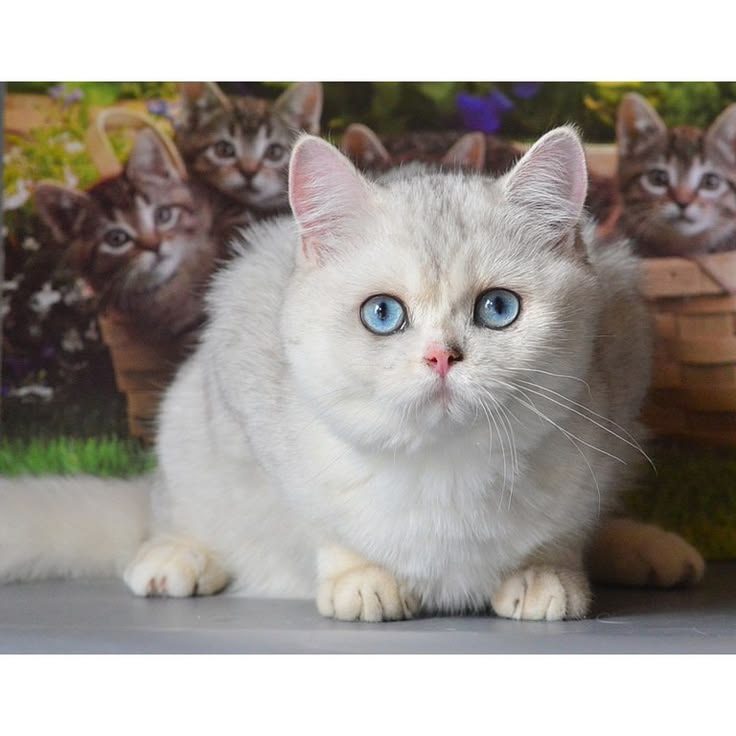
The record
- Register id
- erm-01
- Sex
- female
- Cattery prefix
- Ermine Trace
- Breed, as stated
- British Shorthair
- Line
- Nadeya
- Variant
- DBE-NAD
- Eye status
- blue-variant: both eyes blue, put down to a DBE variant or its line
- Eyes, in the source's words
- blue
- Role
- founder
- Relations named by the source
- sire Schoenweg Teodoro, dam Ermine Trace Olwen; the founder of the line, and every blue-eyed and odd-eyed cat in it is her direct descendant. Mated to Lusy-Mur Dionis, dam of Ermine Trace Lazurit; mated to Ermine Trace Kashemir, who is her own half-brother on the sire's side, dam of Ermine Trace Enya | the line was founded on her in Russia in 2016 and has not been outcrossed, being maintained within the British genetic background. Neither of her parents was a dominant blue eye cat: the sire is a black silver shaded colourpoint with no white whose blue eyes are the colourpoint, and the dam is black silver shaded with no white and green eyes. The variant therefore appears in her and not above her on the record as published
- Country
- RU
- Year
- 2016-10-12
- Photograph credit
- Photograph: Lipovenko, Ermine Trace, from the cattery's own post of 10 May 2017
- EMS code
- BSH ns 09 11 68; ns 11 61 on her cattery's own post of 10 May 2017
- The code read out
- British Shorthair; black silver, black silver; unspecified amount of white, shaded, shaded; blue eyes; Not recognised by this survey: 68; on her cattery's own post of 10 May 2017
- The description held
- silver shaded. The only laboratory result recorded for her is at the c locus: genotyped Ccs, a carrier of one recessive colourpoint allele and not colourpoint herself. That is not a test for any DBE variant and it says nothing about PAX3 | what the phenotype does in this line, as published: Heterochromia or two blue eyes, minimal to no white spotting, and latent cats, meaning carriers in which the eye does not show. Three deaf cats were recorded among tens of dominant blue eyed kittens produced in the line, and the authors state that the variant does not appear to carry an increased risk of deafness on the breeder's data. Repeated matings between two dominant blue eyed cats never produced an abnormal kitten; the proportion of blue eyed to non blue eyed kittens in those litters is what suggests the homozygote is lost in utero rather than born damaged. That is a different loss from the marusya line, where the homozygote was born and did not live. Source: Abitbol M, Eisele T and Lipovenko E, 'Additional PAX3 Variants for Dominant Blue Eyes in Cats', Animal Genetics 2026;57:e70199. S_PAX3_2026_237 | the cattery's own phenotype counts for the line, 2021, over the kittens it had then produced. Of the kittens carrying the determinant: 33 per cent blue eyed with a small amount of white, 20 per cent blue eyed with no visible white, 13 per cent odd eyed with no visible white, 7 per cent odd eyed with sectoral heterochromia and a little white, 7 per cent LATENT, a normal-eyed cat with no white whose pupils glowed red in kittenhood, and 7 per cent green eyed with visible white. Across the whole group: 53 per cent blue eyed, 34 per cent odd eyed of which about a fifth showed sectoral heterochromia, and 14 per cent latent; 60 per cent carried visible white and 40 per cent did not. The segregation test: of 45 kittens out of dominant blue eye to ordinary matings, 21 showed signs of the determinant and 24 did not, with two colourpoints that could not be placed either way. That is 1:1 and it is what a dominant predicts. White, where it appears, is small: one to four pink toes on the hind feet, or a spot on the muzzle. One litter in the whole programme was born with full white socks and none has ever shown stockings. Source: the Ermine Trace cattery's own published account of the line, 'Reviewing the dominant blue (DBE) gene in the Ermine Trace cattery', 2021, in English translation. A breeder statement and not a peer-reviewed source, and the counts in it are the cattery's own. S_ERMINE_238 | the stud book sheets code the founder BRI ns 11 08 61. The register holds BSH ns 09 11 68 from PawPeds. The eye readings agree across the two systems and the white figure differs, 08 against 09. She stands on the dream sheet through Xrustal and on the Yoshiki sheet through Lazurit, four and five generations above the two cats. S_ERMINE_STUD BOOK_240 | her own cattery's first published code for her is not the code this register holds, and the difference is the one the survey has been arguing about. The post of 10 May 2017 writes NS 11 61. The pedigree sheets write BSH ns 09 11 68. THE 09 locket is absent from the earlier code and the eye figure is 61 where the later document writes 68. This is the second documented case of 61 first and 68 afterwards on one animal. The first was Kooper Superqueen, where an archived cattery entry gave 61 and a later registry pedigree gave 68. This register has held that a 61 on a coat without white is a candidate 68, and here the founder of its largest traced line is both, in order, in her own cattery's paperwork. Neither code is discarded and both are carried on this record the date of the post checks her birth exactly. She is held as born 12 October 2016 and the post is dated 12 APRIL 2017, which is six months to the day. The birth date came from the pedigree sheets and the photograph is the cattery's own, so the two sources are independent and they agree to the day. S_NADEYA17_265 | the post itself, read in full, and it does three things no other document here does. The caption reads: 'Ermine Trace Nadeya. Our unique British cat color ns 11 61 - silver muted with blue eyes, not color point. 7 months.' A reply from the same account adds, in Russian: 'By colour and by gene test, shaded, and the eyes are blue and glow red.' One, the breeder rules the point out herself, in writing, in 2017, on the animal that founds the line. This register's pointing rule sets aside any blue eye that a colourpoint coat could explain, and her own breeder closed that question at the time. Two, she says it was checked by test. That agrees with the only laboratory result this register holds for her, the C locus genotype Ccs, a carrier of one recessive colourpoint allele and not colourpoint herself. A breeder's statement and a laboratory result, made years apart, saying the same thing. Three, the red glow is recorded on the founder in 2017, seven years before the published work described the red eye effect as a visible sign of this variant. The age in the caption checks her birth. Seven months old on 10 May 2017 puts her birth at about 10 OCTOBER 2016, and this register holds 12 OCTOBER 2016 from the pedigree sheets. Two days apart, from two sources that do not depend on each other. S_NADEYAPOST_267
- Evidence grade
- DNA genotyped a laboratory result exists for this animal
In the register
- Parents: Schoenweg Teodoro, Ermine Trace Olwen
- Offspring recorded : Dandelion Ermine Trace, Diana Ermine Trace, Eglantine Ermine Trace, Ermine Trace Egretka, Ermine Trace Ember, Ermine Trace Enya, Ermine Trace Lazurit, Ermine Trace Xrustal, Larimar Ermine Trace, Lazurite Ermine Trace, Lolita Ermine Trace, Lucilfer Ermine Trace, Metelitsa Ermine Trace, Morozko Ermine Trace, Ricky Ermine Trace, Rococo Ermine Trace, Ups Ermine Trace, Urania Ermine Trace, Urbi et Orbi Ermine Trace, X-libris Ermine Trace, Xeres Ermine Trace, Ximena Ermine Trace, Xtravaganza Ermine Trace
Source
the PawPeds pedigree for Ermine Trace Nadeya, supplied 17 August 2026. Thirty ancestors of thirty possible, twenty-five of them unique, four complete generations out of four, coefficient of inbreeding 1.56 per cent | the cattery's stud book pedigree sheets for Yoshiki Ermine Trace, BRI ny 11 61, male, 29 November 2022, and Dream Ermine Trace, BRI ny 11 08 61, male, 18 April 2024, both bred by the Ermine Trace cattery, images supplied 13 September 2026. Four complete generations on each, written in the 61 AND 63 eye system | the breeder's own count of the founder's sire, supplied 13 September 2026: Thirteen litters, and Ermine trace Nadeya the only dominant blue eye kitten in any of them | the PawPeds four-generation pedigree for Ermine Trace Olwen, BSH ns 11, female, 27 January 2014, RU. Thirty ancestors of thirty possible, twenty-three of them unique, four complete generations out of four, coefficient of inbreeding 9.38 per cent, and not one animal on it carries an eye code | the cattery's own post of 10 May 2017, instagram.com/silver_goldencats, supplied 13 September 2026, captioned 'Ermine Trace Nadeya, colour ns 11 61'. The earliest dated photograph of the founder held anywhere in this register, and the earliest code her own cattery published for her | dbecats.com, the variants section and its PAX3 schematic, read 13 September 2026. A third party compilation and not a paper. The diagram is captioned as schematic and not drawn to genomic scale, and the site states that six of the variants it lists are characterised in peer-reviewed research
This directory is a working aid compiled from published charts, registry documents and breeder statements. It is not a register and it has no standing of any kind. The grade attaches to the animal, not to the line: a cat whose ancestor was genotyped is line-traced, not genotyped.